
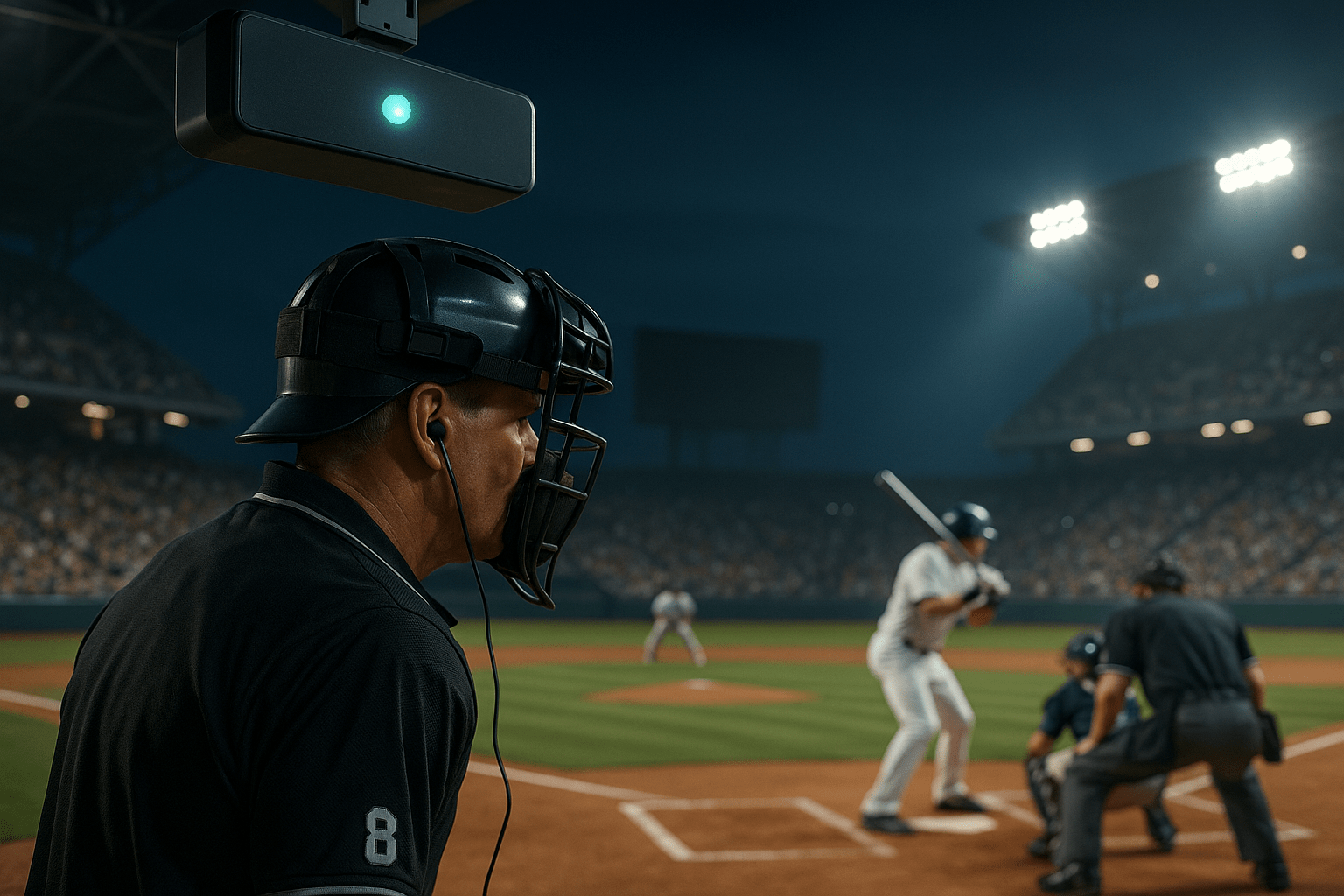
I’m Hiroshi Tanaka, an IELTS Reading expert with nine years of experience teaching Cambridge passages, including Cambridge 20 Reading Test 2 Passage 3 – Invasion of the Robot Umpires. At IELTS Zone, I help learners identify reading patterns, recognise paraphrases, and avoid traps — boosting both accuracy and confidence for higher band scores.
The Cambridge 20 Reading Test 2 Passage 3 – Invasion of the Robot Umpires explores how artificial intelligence is transforming professional baseball. It explains how the Automated Ball-Strike System (ABS) assists human umpires, the debates surrounding fairness and accuracy, and how fans and players react to technology in sport. Understanding this passage helps IELTS learners practise interpreting opinions, evidence, and implications — essential for Band 7 + in IELTS Reading.
Cambridge 20 Reading Test 2 Passage 3
Questions 27–32 | YES / NO / NOT GIVEN
This True/False/Not Given-type question follows passage order. To learn how to identify writer’s opinions efficiently, see our full guide on Yes / No / Not Given Questions.
- When DeJesus first used ABS, he shared decision-making about strikes with it.
Keywords: DeJesus, ABS, shared decision
Location: Paragraph A — Lines 2–6 (“Instead of making any judgments himself about a strike… decisions fed to him through an earpiece.”)
Explanation: He did not share decisions; the system made them and fed them to him.
Answer: NO - MLB considered it necessary to amend the size of the strike zone when criticisms were received from players.
Keywords: MLB, tweak zone, complaints
Location: Paragraph D — Lines 1–4 (“During the first robo-umpire season, players complained… MLB decided to tweak the dimensions of the zone.”)
Explanation: The league reacted directly to player feedback and adjusted the strike zone.
Answer: YES - MLB is keen to justify the money spent on improving the accuracy of ABS’s calculations.
Keywords: justify cost, accuracy
Location: Not mentioned anywhere in the text.
Explanation: No financial information or justification appears.
Answer: NOT GIVEN - The hundred-mile-an-hour fastball led to a more exciting style of play.
Keywords: fastball, excitement
Location: Paragraph F — Lines 6–9 (“It flattened the game into strikeouts, walks, and home runs… lacking much action.”)
Explanation: It actually made baseball less exciting.
Answer: NO - The differing proposals for alterations to the baseball bat led to fierce debate on Sword’s team.
Keywords: bat, debate
Location: Paragraph G — Lines 3–6 (“They talked about changing the bats… all of these were ruled out.”)
Explanation: No argument was mentioned; ideas were dismissed quickly.
Answer: NOT GIVEN - ABS makes changes to the shape of the strike zone feasible.
Keywords: shape, change
Location: *Paragraph G — Lines 6–10 (“Once you get the technology right, you can load any strike zone you want…”) *
Explanation: Sword confirms any shape is possible with ABS.
Answer: YES
Questions 33–37 | Summary Completion
This Summary Completion question type follows order. For grammar and synonym practice, visit our Summary Completion Guide.
- F – former roles
Location: Paragraph B — Lines 1–5
Explanation: MLB kept human umpires announcing calls as they had in their former roles.
Answer: F - D – subjective assessment
Location: Paragraph B — Lines 5–7
Explanation: Calling a strike used to require subjective judgment by the umpire.
Answer: D - H – perceived area
Location: *Paragraph B — Lines 7–10 (“… passes through the ‘strike zone’ – an imaginary zone about seventeen inches wide…”) *
Explanation: The strike zone is a perceived area between knee and chest.
Answer: H - B – numerous disputes
Location: Paragraph C — Lines 1–6
Explanation: Historic arguments over strike calls were common.
Answer: B - G – total silence
Location: Paragraph B — Lines 10–13 (“When DeJesus announced calls… nobody said a word.”)
Explanation: Unlike past games, the crowd responded with total silence.
Answer: G
Questions 38–40 | Multiple Choice
- What does the writer suggest about ABS in the fifth paragraph?
Keywords: paragraph E / appeal of game
Location: Paragraph E — Lines 1–6 (“… ABS works as designed, but it was also unforgiving… Some pitchers complained…”)
Explanation: The writer implies that the precision may remove human charm and reduce the game’s appeal.
Answer: B – It may reduce some of the appeal of the game. - Morgan Sword says that the introduction of ABS …
Keywords: Sword, younger fans
Location: *Paragraph F — Lines 2–5 (“… executives are terrified of losing younger fans…”) *
Explanation: ABS was introduced to keep baseball appealing to young audiences.
Answer: D – was an attempt to ensure baseball retained a young audience. - Why does the writer include the views of Noë and Russo?
Keywords: Noë, Russo, accuracy vs enjoyment
Location: Final paragraph — Lines 4–12
Explanation: Both argue that perfection and accuracy don’t equal fun or reality in sport.
Answer: C – to indicate that accuracy is not the same thing as enjoyment.
Practice & Further Resources
Excellent work! You’ve completed the Cambridge 20 Reading Test 2 Passage 3 – Robot Umpires passage. Keep your momentum by taking more IELTS Reading Practice Tests and reviewing earlier passages. For complete study, practise the full Cambridge IELTS 20 series — Reading Test 2, Listening Test 2, Writing Test 2, and Speaking Test 2.
Tips for Success
- Identify the writer’s view — not just facts.
- Watch for contrast markers like “however” or “but”.
- Distinguish between what is said and what is implied.
- Practise technology and sports-related texts in our 👉 Reading for Inference guide.
New Vocabulary
To build your IELTS Reading vocabulary, explore our full IELTS Vocabulary page. Here are key words from Cambridge 20 Reading Test 2 – Robot Umpires with simple meanings:
- Umpire – the official who makes decisions in baseball or cricket.
- Algorithm – a set of rules a computer uses to solve problems.
- Precision – exact accuracy in measurement or decision.
- Controversy – public disagreement or debate.
- Artificial Intelligence (AI) – technology that simulates human decision-making.
- Automation – use of machines to perform tasks without human intervention.
Learning these words will help you understand future IELTS texts about technology and innovation.
Final Thoughts
The Cambridge 20 Reading Test 2 Passage 3 – Robot Umpires passage illustrates how technology can improve accuracy yet reduce human emotion in sport. It tests your ability to analyse arguments and identify writer’s attitudes — a high-level IELTS skill.
Next, move to Cambridge 20 Reading Test 3 Passage 1 – Frozen Food, where you’ll explore how innovation and industry development transformed the way we preserve and consume food.
FAQ
Q1. What is ABS in baseball?
The Automated Ball-Strike System — a technology that calls balls and strikes with AI precision.
Q2. Why do some players oppose ABS?
They believe it removes human interaction and makes the game less authentic.
Q3. How did fans react to the first robo-umpire game?
With complete silence — a striking contrast to past arguments.
Q4. Which IELTS skills does this passage develop?
Recognising opinions, understanding cause-and-effect, and interpreting writer’s tone.
External References
For authentic IELTS guidance and official updates, visit the British Council, IDP IELTS, and IELTS.org — the three organisations behind the IELTS exam. To build further reading and exam skills, join expert-led programmes on Course Line – IELTS Preparation Courses.


One Response